

Vocational Education and Training is evolving towards a model that is increasingly connected to innovation, companies and the real challenges faced by society. In this context, the concept of applied research in Vocational Education and Training (VET) is becoming especially important.
Applied research does not seek to generate knowledge in an abstract way, but rather to develop practical solutions for specific needs. In VET, this means that training centres, teachers, students, companies and specialised organisations can collaborate to test new methodologies, adapt emerging technologies or transform vocational training in strategic sectors.
This approach turns VET into a space for experimentation, innovation and knowledge transfer. For example, Skills Divers works on projects where technology is placed at the service of training and inclusion. One example is the application of extended reality —XR— in sectors such as special education, through initiatives such as BitTheSpectrum, where immersive technologies can support more accessible, visual and adaptable learning experiences for different needs.
Another example is the future development of results within the framework of GreenChem CoVE, focused on transforming chemistry laboratories for training in sustainable chemistry. These types of initiatives will help bring VET students closer to new practices related to safety, sustainability, resource efficiency and the adaptation of the chemical industry to current environmental challenges.
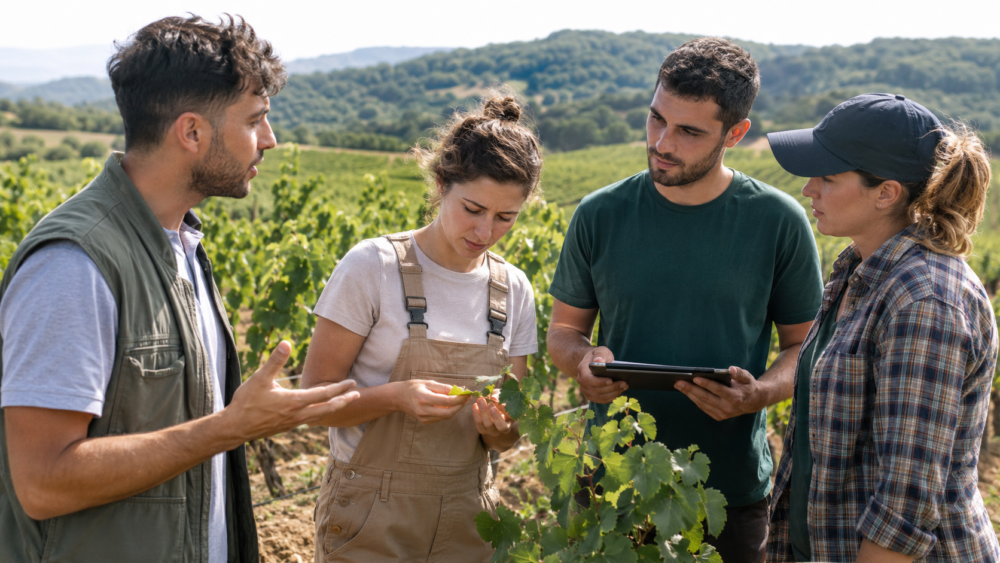
There are also highly relevant examples within the skills ecosystem of the Region of Murcia (Spain), especially in the agri-food sector. Through initiatives such as the Training and Technology Transfer Service, linked to the CIFEAs (VET schools of Agri food), dissemination events, demonstration activities and practical experiments are organised to bring R&D closer to the productive sector. In this context, organisations such as CIFEA de Jumilla, el IMIDA and universities such as UPCT, take part, connecting scientific knowledge, vocational training and the real needs of the agricultural sector. These actions make it possible to transfer research results to farmers, technicians and VET students, particularly in areas such as sustainable agriculture, digitalisation, new crops, water efficiency and the improvement of agricultural processes. The regional initiative SFTT is a good example of how applied research can become useful training and concrete solutions for the territory.
Applied research in VET also improves students’ employability, as it places them in front of real problems and allows them to develop key competences such as problem-solving, teamwork, creativity, technical communication and the ability to adapt to new professional environments.
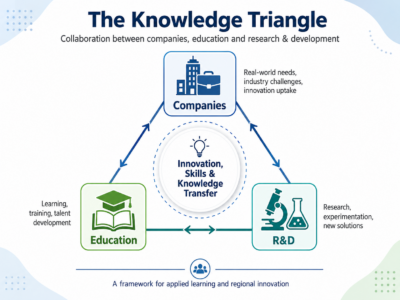
It also strengthens collaboration between training centres, companies and innovative organisations. Companies contribute real challenges; VET centres provide technical knowledge and talent; and organisations such as Skills Divers help design methodologies, tools and European projects that turn these ideas into concrete results.
Ultimately, talking about applied research in Vocational Education and Training (VET) means talking about a more useful, modern and reality-connected VET system. A VET system capable of transforming learning into solutions, bringing innovation into the classroom and preparing professionals for sectors that are already changing.
 English
  Spanish